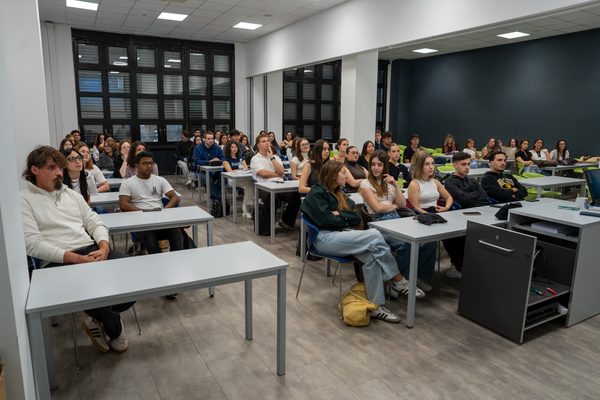
The forum brought together business and academic experts, representatives of higher education institutions, employers, ministries and agencies, and students from Germany, Greece, France, the Netherlands, Belgium, the USA, Slovakia, Ireland and Croatia.
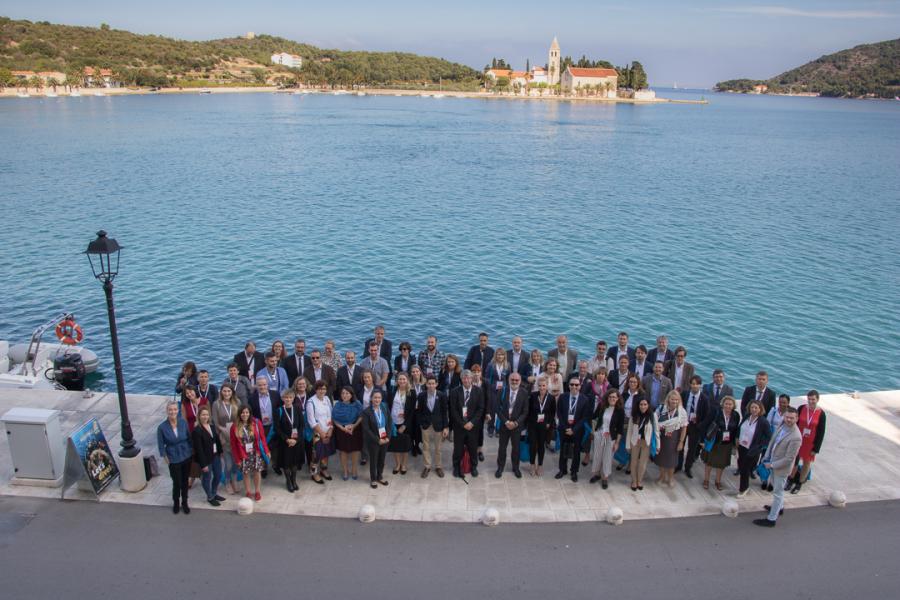
Encouraging cooperation between higher education institutions and the economy, introducing a model of mandatory student internship and work-based learning, simpler legislation, encouraging students to start companies, monitoring their employability, and developing a sense of social entrepreneurship are key elements for encouraging greater (self-)employment and the successful integration of students and young people into the Croatian and international labor markets.
This was stated by domestic and international experts from nine countries at the panels and workshops of the "University Business Forum" , which was held on October 19th and 20th on the island of Vis on the topic "Learning by earning - first steps to (self)employment" .
This is the European Commission's platform for encouraging greater youth employability, which was hosted in Croatia for the first time, and the first Croatian and regional UB Forum was jointly organized by the European Commission and VERN', in cooperation with the Croatian Employers' Association, the Universities of Rijeka and Split, and with the support of the Ministry of Science and Education, the Ministry of Economy, Entrepreneurship and Crafts, and the Ministry of Labor and Pension System.
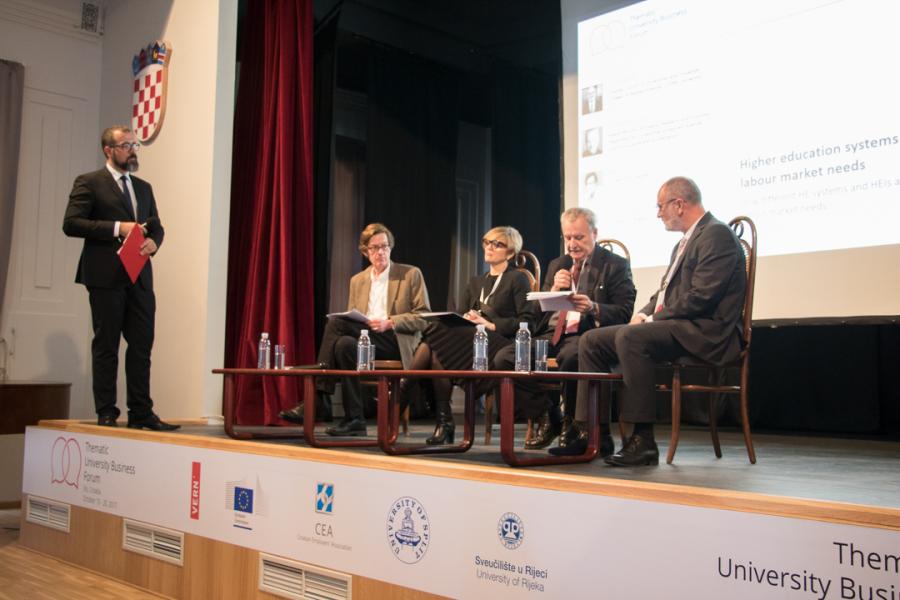
The forum brought together business and academic experts, representatives of higher education institutions, employers, ministries and agencies, and students from Germany, Greece, France, the Netherlands, Belgium, the USA, Slovakia, Ireland and Croatia, who presented their countries' experiences and challenges in encouraging youth (self-)employment.
"Youth unemployment in the EU is very diverse. In some countries it is 25, 30, 35 percent, while in other countries the rates are very low, like Germany or Austria. On the other hand, there are countries like Spain and the southern countries, where youth unemployment rates are very high," said Peter Baur from the European Commission's Directorate-General for Education and Culture.
[He added the tools the EU uses to encourage youth employability and cooperation between education and the labor market. Statement.mp3]
The leaders of Croatian universities at the conference also warned about the challenges that young people face when integrating into the labor market, as well as the challenges in cooperation between education and the economy.
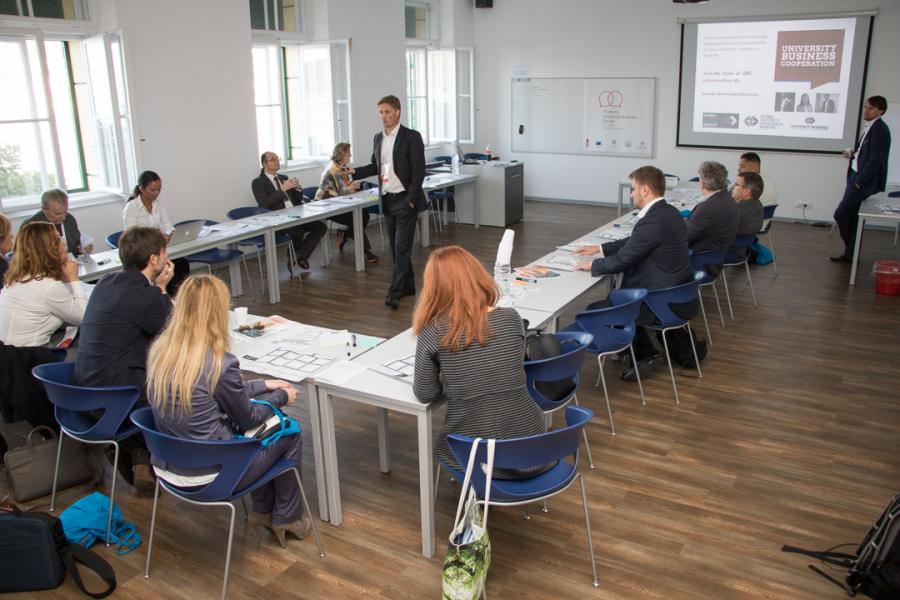
"The academic community must be sensitized to the fact that students need more practical competencies, more professional practice and opportunities to acquire certain competencies that will make it easier for them to find a job," emphasized Dr. Snježana Prijić-Samaržija , Rector of the University of Rijeka.
[She also emphasized the importance of consistency in the implementation of such decisions. Statement.mp3]
"The state should strengthen the dual education system, a platform within which students will be able to carry out their internships, but at the same time free them from any penalization, i.e. unnecessary payments, which would further encourage the economy to open such places for students," commented Dr. Marko Rosić , Vice-Rector of the University of Split.
"Higher education institutions must take into account the skills and abilities of students entering the labor market, because their employability is in a certain way a measure of the success of the institution itself," said the dean of VERN, Prof. Dr. Sc. Vlatko Cvrtila.
[He listed models for how higher education institutions can adapt to the needs of the labor market. Statement.mp3]
During the two-day conference, a total of 3 panels and 5 workshops were held, as well as several sessions discussing topics such as the alignment of binary education systems with the needs of the labor market, dual studies, work-based learning, social entrepreneurship, cooperation between faculties and employers, entrepreneurial learning, but also the need to monitor student employability.
"The Ministry conducted research on approximately a thousand study programs in which we analyzed the extent to which any forms of work-based learning are implemented in existing systems and conditions, either with employers or within the higher education system. Based on the results, we developed a project through which higher education institutions will be able to finance their projects and models of work-based learning," announced Ana Tecilazić Goršić , Head of the Service for Quality of Higher Education at the Ministry of Science.
[She explained which models higher education institutions will be able to apply for. Statement.mp3]
More detailed information about the thematic "University Business Forum" on Vis can be found on the official website http://www.ubforum-croatia.eu/