VERN' Polytechnic is one of the partners in this project, which the European Commission, through the EUSDR, has declared as one of the nine most important strategic projects for the Danube region.
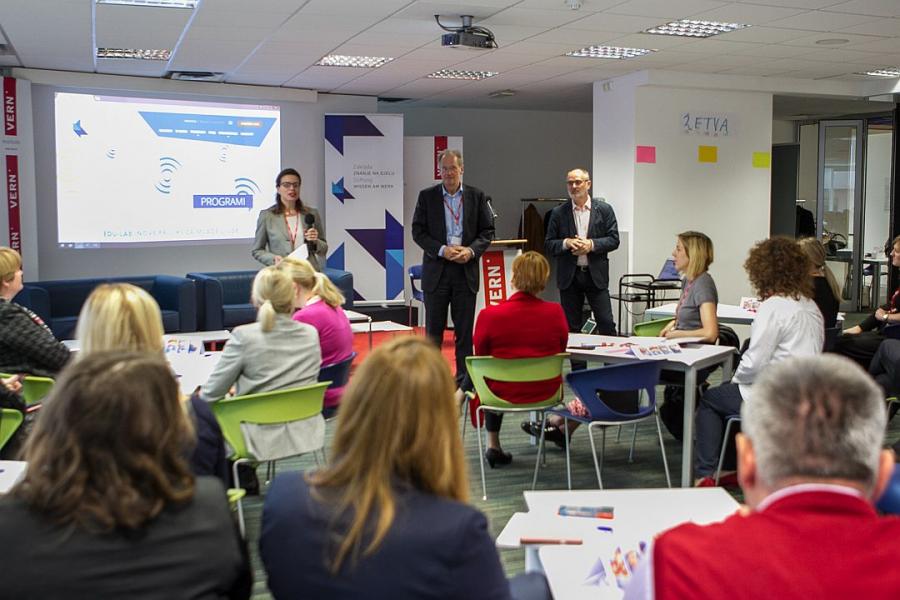
Developing study programs in cooperation with the economy, integrating the business sector into academic processes, and encouraging the student population to cooperate with companies are key tools for strengthening cooperation between higher education and the economy and educating experts according to current labor market needs.
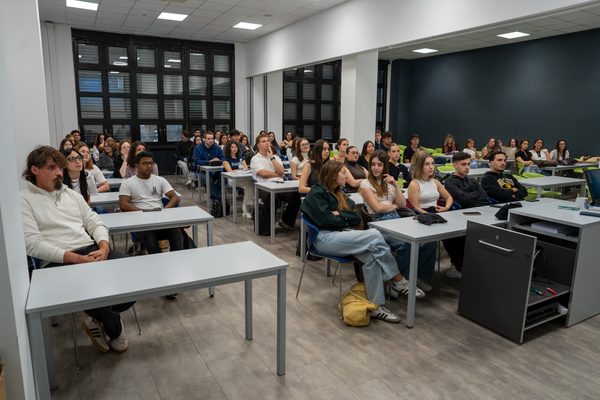
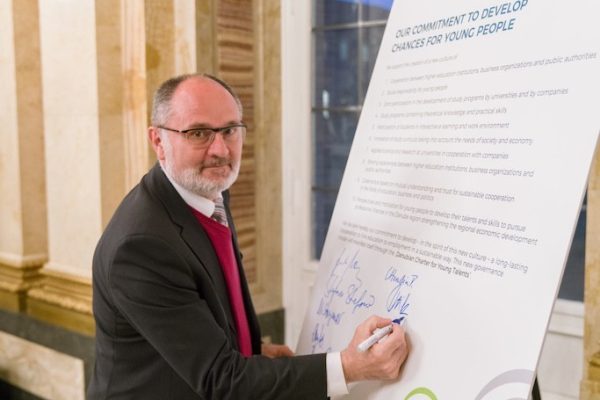
This is the conclusion of today's workshop at VERN, which was organized by the Knowledge in Action Foundation and the VERN Polytechnic, as part of the activities of the international project "New Danubian Governance in Labor market Relevance of Higher Education (EDU-LAB)", and at which the best practices in connecting institutions of higher education and the labor market were presented, with the aim of creating better opportunities for the professional development of young people in the Danube region and preventing brain drain.
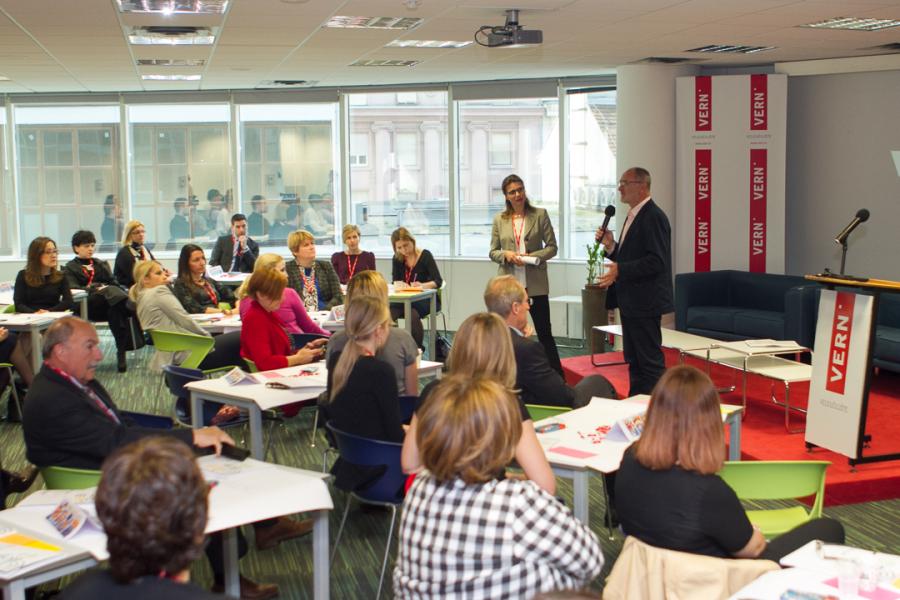
Domestic and international experiences in implementing the dual education model were presented by prof. Dr. Pál Lukács from the Hungarian Polytechnic Neumann János and Adriano Liebhard from Siemens Croatia.
"Our dual education system consists of 13 weeks of lectures, 8 weeks of work in a company, 13 weeks of lectures and 14 to 16 weeks of work in a company, and 2 to 4 weeks of holidays. The system is based on the German model, and we saw the need for this kind of education with the arrival of international manufacturing companies like Mercedes, which needed qualified engineers," emphasized Prof. Lukács .
Student competitions and workshops are just some of the domestic examples that Siemens cites as tools for successful cooperation with the academic community and the education of future experts according to the needs of the organization itself.
"We base our cooperation with educational institutions and students on educational packages, workshops for schools, courses for teachers, cooperation on EU projects and more advanced models of cooperation. These include the creation of final theses and seminars, professional courses for students, student workshops and PLC+ competitions, participation in the creation of curricula, the organization of professional courses for industry and the like. The initiative for cooperation also comes from the students themselves, primarily those with a technical background, who initiated the first student competitions," emphasized Adriano Liebhard from Siemens.
The international project "EDU-LAB" is co-financed by the European Union (ERDF and IPA), and involves 18 partner institutions from 10 countries from the higher education and business sectors, as well as national legislative institutions. VERN' Polytechnic is one of the partners in this project, which the European Commission, through the EUSDR, has declared as one of the nine most important strategic projects for the Danube region.
The event was opened with introductory speeches by Prof. Dr. Vlatko Cvrtila , Dean of VERN, Dr. Caroline Hornstein Tomić , Founder of the Knowledge in Action Foundation, and Prof. Dr. Wolfgang Schuster , President of the European Foundation for Education, the project's lead organization.
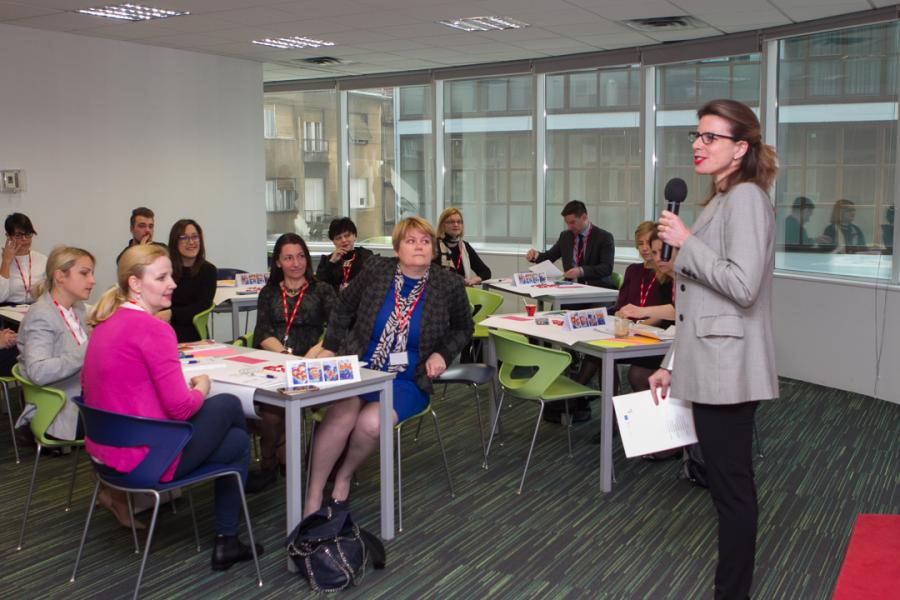
As part of the event, a thematic workshop on cooperation between education and the labor market was held, where participants exchanged ideas, best practices and experiences of their institutions in the field of launching career centers, entrepreneurial incubators, dual education, internship management, common curricula and the like.