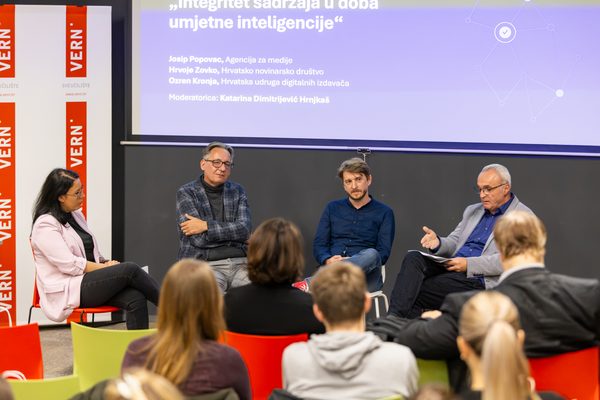
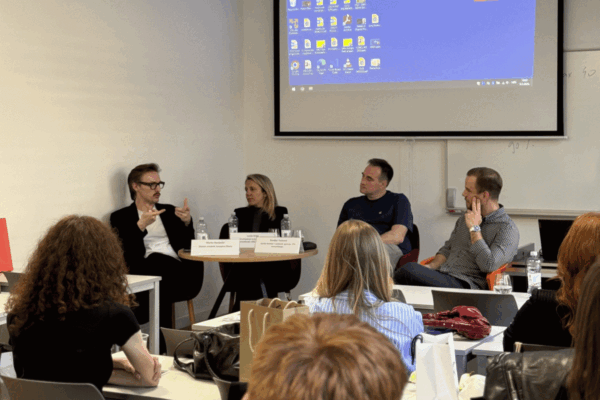
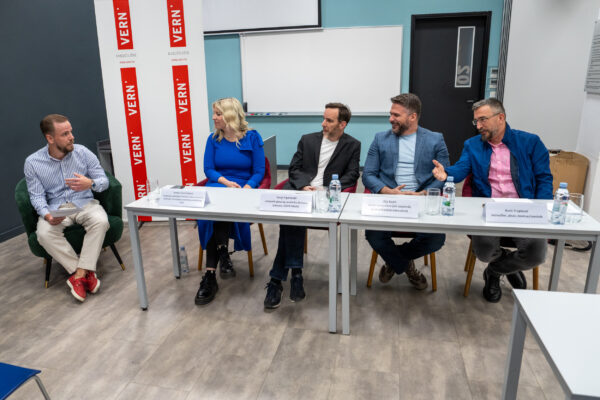
The panel guests were Ružica Cigler, former editor-in-chief of Večernji list, Dr. Marijana Grbeša – Zenzerović from the Faculty of Political Science, Dr. Ivan Tanta from VERN'a, and Robert Tomljenović from the Agency for Electronic Media.
"We need to implement media literacy in educational curricula. Media literacy needs to be viewed from a lifelong learning perspective. Traditional media has lost the race to speed and must focus on quality."
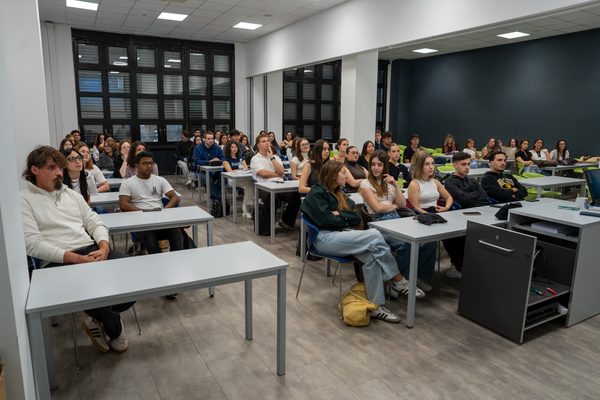
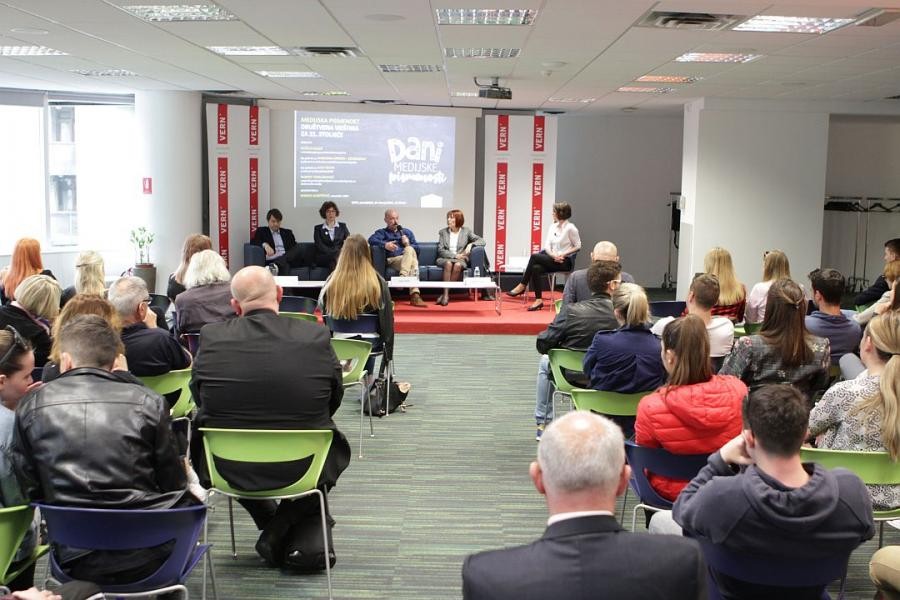
This is part of the conclusions presented at today's panel "Media Literacy - Social Skills for the 21st Century", which was held at VERN' University as part of the "Media Literacy Days" event, implemented by the Agency for Electronic Media and UNICEF.
Panel guests Ružica Cigler , former editor-in-chief of Večernji list, Dr. sc. Marijana Grbeša – Zenzerović from the Faculty of Political Science, Dr. sc. Ivan Tanta from VERN'a and Robert Tomljenović , Deputy President of the Council and Director of the Agency for Electronic Media, pointed out that media literacy has today become a primary skill for understanding society and events, drawing conclusions and creating correct attitudes. They also emphasized that this topic is not new in Croatia, because scientific literature on media literacy exists, but has not yet been implemented in educational processes, and that it is actually paradoxical that trust in digital media is relatively low, while at the same time the influence of digital media platforms is growing the most.

"The emergence of digital media has caused a moral panic and they can be very dangerous if you don't know how to read them. Understanding the media is also important due to the emergence of so-called interpretive journalism, which is increasingly replacing informative journalism, especially in countries with low trust in institutions such as Croatia, where media interventionism is rampant, where the media take it upon themselves to explain reality to citizens," Grbeša - Zenzerović pointed out.
"The public debate on the Istanbul Convention has shown the full extent of media illiteracy, because the public only passively perceived the information served. If citizens in a media literacy survey gave themselves a score of 2.8 for media literacy, out of a possible 5, then you can imagine what an objective score would be," commented Ivan Tanta .
"There has always been skepticism towards the media, which, due to technological developments, chase after news and automatically serve it, instead of covering topics comprehensively and very thoroughly so that the reader can gain an overall picture of events and recognize the connection between cause and effect. And the reader's task is to pay attention to the relevance of the media through the imprint and ownership structure," emphasized Ružica Cigler .

"According to the 2018 Media Literacy Index, Croatia ranked 24th, while Finland ranked 1st, a country where media literacy was introduced into primary and secondary school curricula in 1972, and two years ago into kindergarten and preschool curricula. We must become aware as a society of the importance of media literacy," noted Robert Tomljenović , adding that according to the survey, only 7 percent of citizens consider the media responsible for media literacy education.
The panelists agreed that the most important media resource today has become consumer attention, which favors the strengthening of the phenomenon of fake news and clickbait headlines, which encourage commenting on the news, while the comments have become a reflection of general illiteracy and a low level of culture.