„Tek 8 posto starijih od 16 godina u Hrvatskoj imalo je priliku slušati ili učiti o vještinama kritičkog sagledavanja medijskog sadržaja. Nešto manje od trećine roditelja nikada ili rijetko razgovara s djecom o medijima i medijskim sadržajima, a loptica odgovornosti sve se češće s industrije prebacuje na roditelje. Nešto manje od polovice roditelja je zabrinuto za djecu zbog korištenja YouTubea, a najviše zbog lake dostupnosti nasilnih i neprimjerenih (73 posto) i dobno neprimjerenih sadržaja (40 posto).“
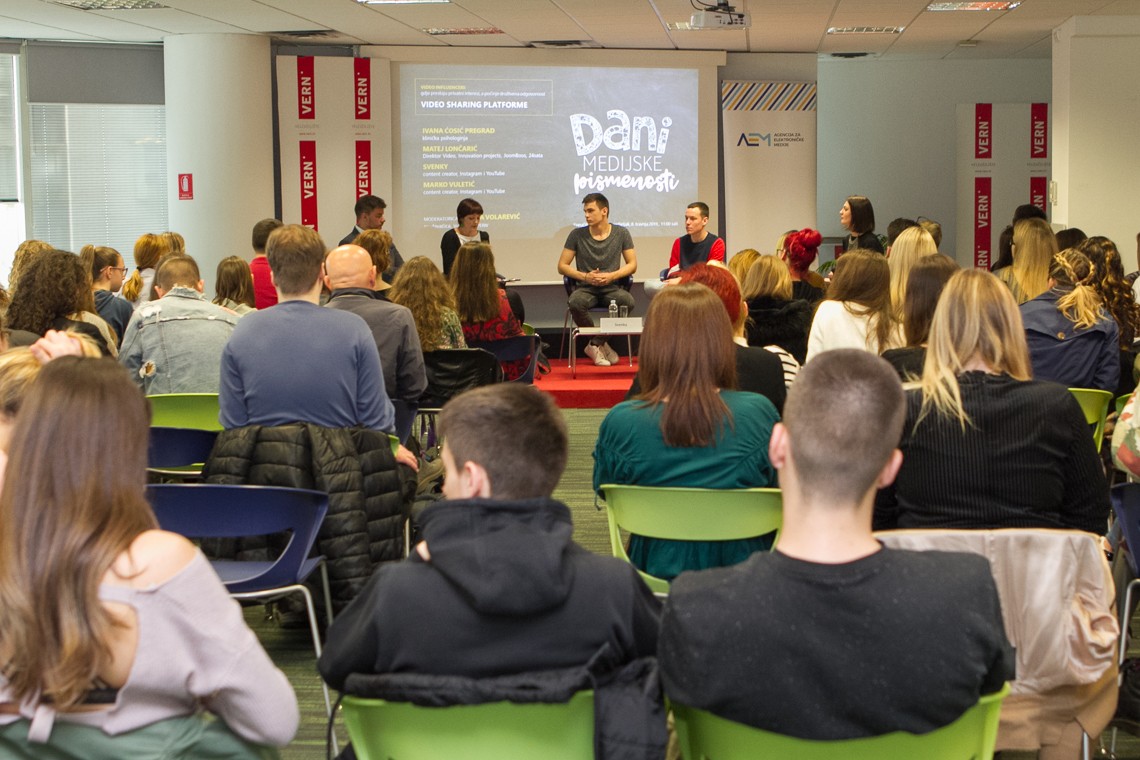
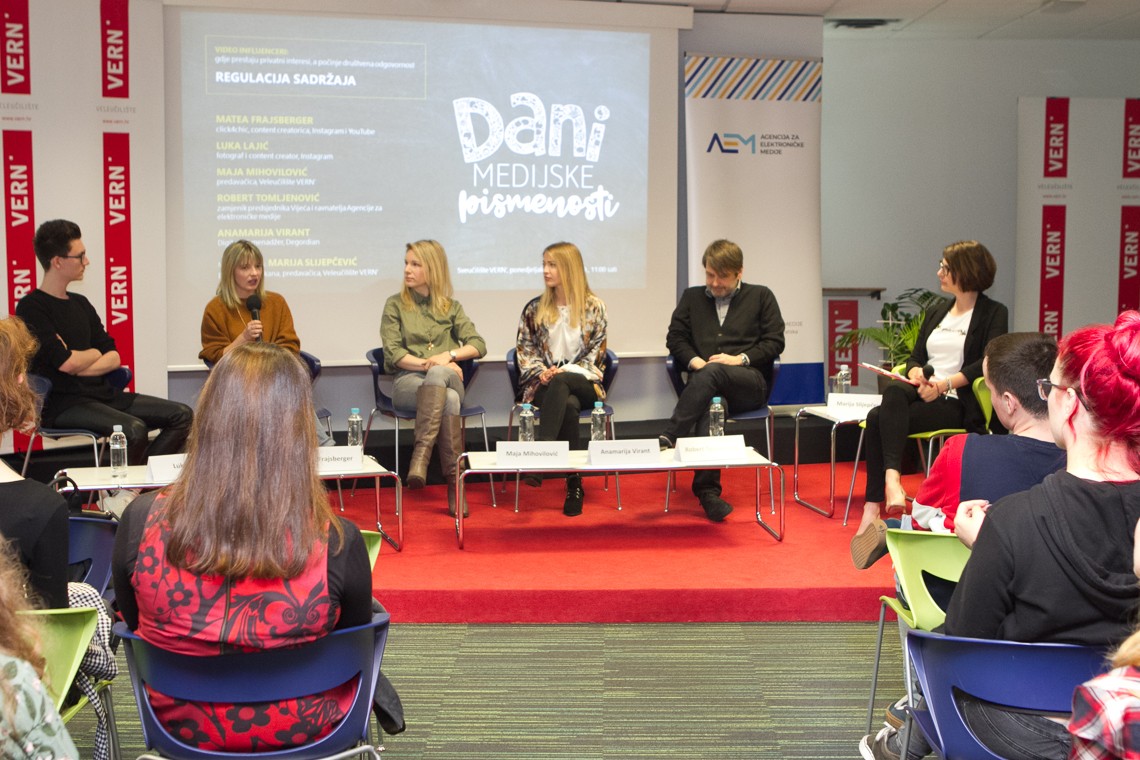
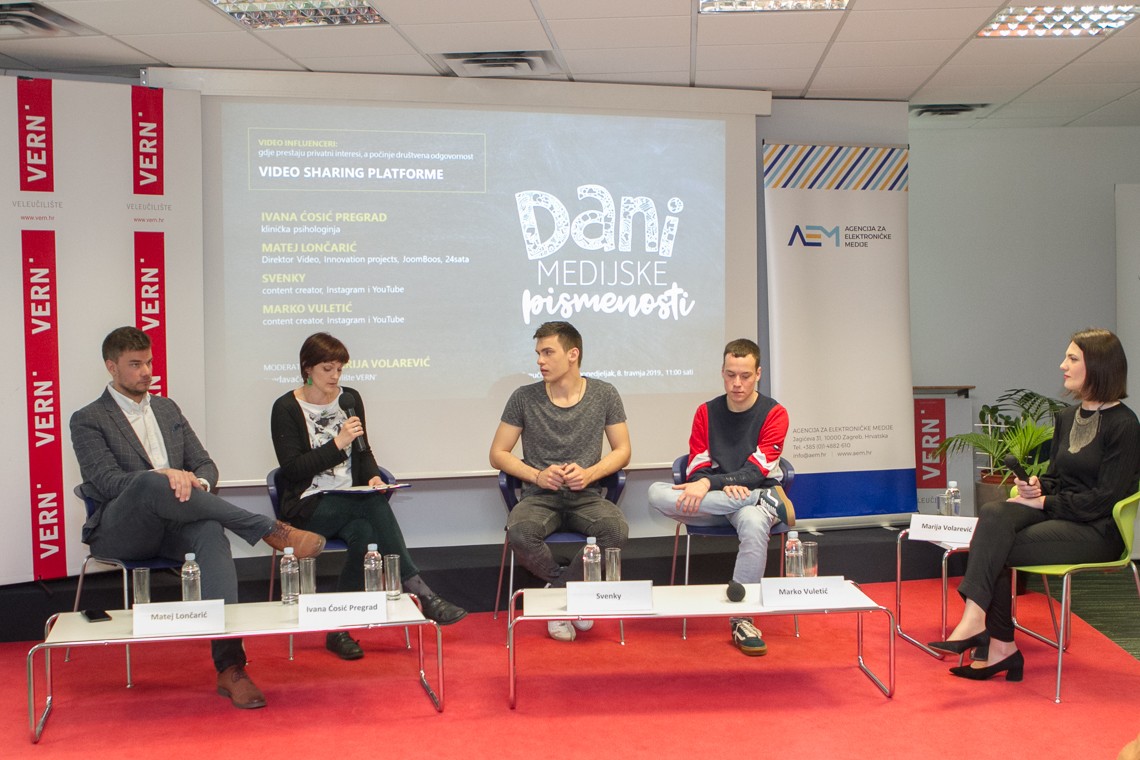
Pokazalo je to istraživanje Agencije za elektroničke medije iz ožujka 2019., čiji su rezultati danas spomenuti na panel diskusiji „Video influenceri: gdje prestaju privatni interesi, a počinje društvena odgovornost“, koja je održana na VERN’u u okviru obilježavanja Dana medijske pismenosti, manifestacije koju organiziraju Agencija za elektroničke medije i UNICEF Hrvatska.
Diskusija u dva dijela okupila je predstavnike regulatornih tijela i medija, stručnjake iz područja obrazovanja i psihologije te kreatore internetskog sadržaja: Ivanu Ćosić Pregrad, kliničku psihologinju; Mateja Lončarića iz JoomBoosa; Roberta Tomljenovića, zamjenika predsjednika Vijeća i ravnatelja Agencije za elektroničke medije, Anamariju Virant iz Degordiana, Maju Mihovilović, predavačicu s VERN’a te kreatore sadržaja na YouTubeu i Instagramu Mateu Frajsberger, Svenkyja, Marka Vuletića i Luku Lajića.
Cilj panela bio je analizirati kakva je odgovornost kreatora sadržaja, kakva je odgovornost samih medija, pa i internetskih platformi, ali i zakonodavstva u segmentu produkcije i distribucije sadržaja te utjecaju na mlade i kreiranje njihovog mišljenja.
Istraživanje svjetskog konzorcija EU Kids Online je pokazalo da se „gotovo četvrtina roditelja u Hrvatskoj slaže s tvrdnjom da je na internetu dopušteno vrijeđati i krivo se predstavljati. Nadalje, 34 posto djece i mladih je istaknulo da se osjeća sposobnim provjeriti točnost informacija koje su pronašli na internetu, dok ih 32 posto smatra da mogu lako donije odluku kojem izvoru će vjerovati“, upozorila je psihologinja Ćosić Pregrad.
„Razina naše odgovornosti je pomalo zastrašujuća jer ja svojim sadržajem zapravo utječem na nečije mišljenje. Mislim da mi imamo veliku odgovornost, ali tu odgovornost moramo na pravilan način prezentirati i promovirati“, objasnio je Svenky.
Marko Vuletić iz Joomboosa smatra da kreatori sadržaja, ali i oni kao platforma moraju znati „kako napraviti zabavan sadržaj da ga mladi konzumiraju, ali i kritički vrednuju“.
Anamarija Virant iz Degordiana je naglasila da u suradnji i promociji na digitalnim kanalima sudjeluju tri strane – „brend, agencija i influencer, a svima im mora biti u cilju da je krajnji sadržaj potpuno usklađen sa svim propisima. Nažalost kod nas to nije uvijek slučaj“.

VERN’ov student i jedan od kreatora online sadržaja Luka Lajić je istaknuo da on „inzistira od samih brendova ili agencija da svaki post koji plasiram bude naglašen kao sponzoriran, jer je važna iskrenost s publikom“.
„Medijski proizvod ne može biti svrstan u kategoriju potrošačkih proizvoda, jer medijski proizvod danas nije bezazlen i posljedice njegove konzumacije mogu biti dalekosežne“, upozorila je predavačica s VERN’a Maja Mihovilović. Obje panel diskusije su moderirale VERN’ove predavačice – Marija Volarević i Marija Slijepčević.