With practical work, intensive discussions and concrete examples, the participants acquired tools that will help them to contribute to the creation of a better media space with their own stories.
Constructive and solution-oriented journalism is an approach that goes beyond classic problem reporting – it focuses on solutions, shows the effectiveness of real interventions, and offers models that can be applied elsewhere. This approach has become increasingly popular in many countries in recent years, including the USA, the UK, Denmark, and Germany, and is increasingly developing in the Croatian media space.

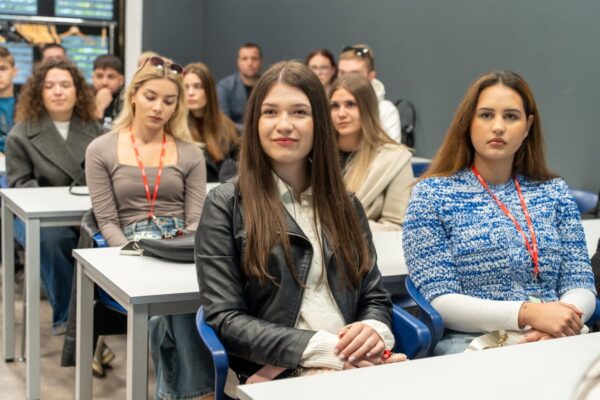
In this context, in early December, the international conference "Constructive Journalism: A Step Towards the News We Need" was held at the Kaptol Boutique Cinema, attended by students and professors from VERN' University, along with numerous European and Croatian journalists and experts in constructive journalism.
The conference was organized by the Agency for Electronic Media and the Faculty of Political Science in Zagreb, with the support of the Media Center of the FPZG and the Croatian Association of Digital Publishers (HUDI), and within the framework of the measure of the National Recovery and Resilience Plan "Establishment of a system for verifying the accuracy of information", whose holders are the Agency for Electronic Media and the Ministry of Culture and Media of the Republic of Croatia.
Dr. sc. Nina Obuljen Koržinek , Minister of Culture and Media of the Republic of Croatia, highlighted two key mechanisms that, during the implementation of this project, significantly contributed to creating a favorable environment for the spread of constructive journalism in Croatia, namely the "Točno tako" platform for publishing news from independent fact-checkers and the digital system for publicly publishing data on media ownership and financing.
She also referred to the European Media Freedom Act (EMFA), emphasizing that these projects anticipated the standards that EMFA prescribes today, especially in the segments of transparency, professionalism, and protection of the information space from disinformation.
The minister also warned about the challenges that the media are facing, among which are the loss of audience, the dominance of social networks and the decline of trust. Therefore, she indicated that it is important to continue investing in the expansion of media literacy, which is why, starting next year, media literacy programs will also be implemented through the network of public libraries.
The participants were also addressed by Zrinka Ujević , Head of the European Commission Representation in Croatia, Josip Popovac , Director of the Agency for Electronic Media (AEM), Dr. Petra Kovačević from the Faculty of Political Science, and AEM Deputy Director Robert Tomljenović , while among the foreign guests, Ulrik Haagerup , founder of the Constructive Institute and one of the leading figures of the European constructive journalism movement, and Professor Peter Bro , a pioneer in research on constructive media practices, stood out.

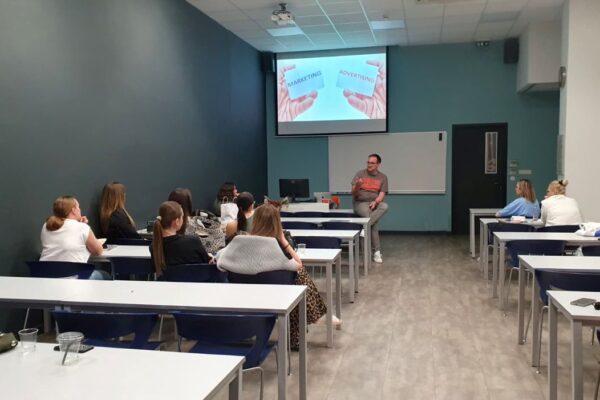
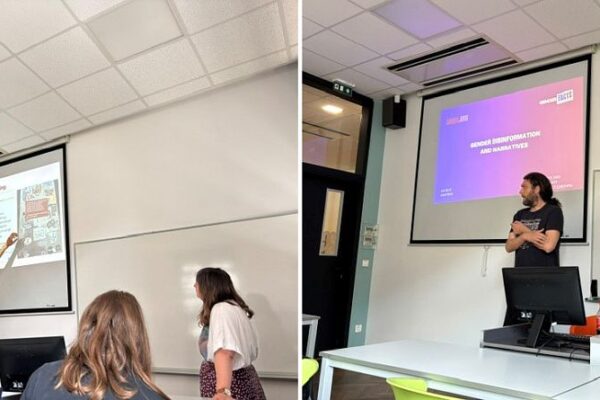
The day after was reserved for students, namely a six-hour workshop at the Faculty of Political Science, where students from the Faculty of Political Science, the University of North, the University of Dubrovnik, the University of VERN' and other related faculties that study journalism went through intensive exercises and an exchange of ideas. Our representative, student Marinela Mesar , shared her impressions with us.

"The workshop was led by Lucie Černa , an international educator specializing in this approach to journalism from the Prague-based publishing house Transitions Media, which is increasingly recognized among contemporary media editorial offices. It was divided into four thematic blocks – what is solution-oriented journalism, how to do solution-oriented journalism, researching problems for a NUR story, preparing and presenting your own story – with the aim of introducing young journalists to the principles and methods of solution-oriented journalism and training them for independent work."

As a result of the workshop conceived in this way, the students learned that journalism solutions are not classic 'positive journalism', but rigorous and evidence-based reporting, according to the following elements:
- analysis of existing solutions, not just a description of the problem
- proving the effect, instead of merely stating intentions
- presentation of processes and models that can be applied elsewhere
- highlighting and limitations – because perfect solutions do not exist.
The lecturer highlighted the following as sources for such journalism:
- think tanks and public policy experts
- university and research circles
- large databases
- the people who implement the solutions and those who are affected by the problem
- networks of innovators and foundations that fund programs.
When developing their own topics, students dealt with:
- safety problems on the road section between Dubrovnik and Ston, with an analysis of possible interventions such as installing cameras, lighting, patrols and better protective fences
- initiatives of associations that organize free Croatian language courses for foreign workers, with participants recognizing room for improvement
- train delays, especially on the Koprivnica-Zagreb route, and the infrastructural neglect of railway connections in certain areas in Croatia, in the context of connecting Rijeka and Istria
Let us add that a similar workshop was also held for journalists, editors, and professors.
(collaborator: Marinela Mesar)