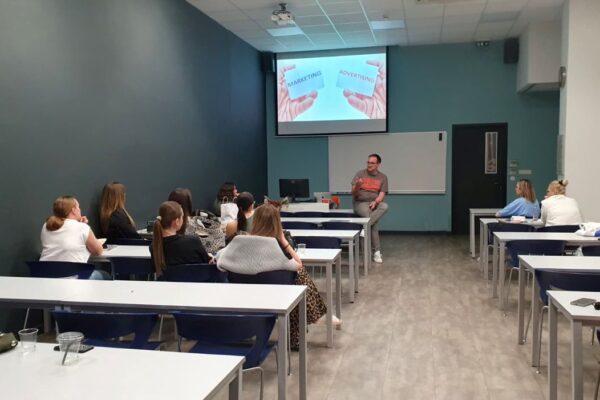
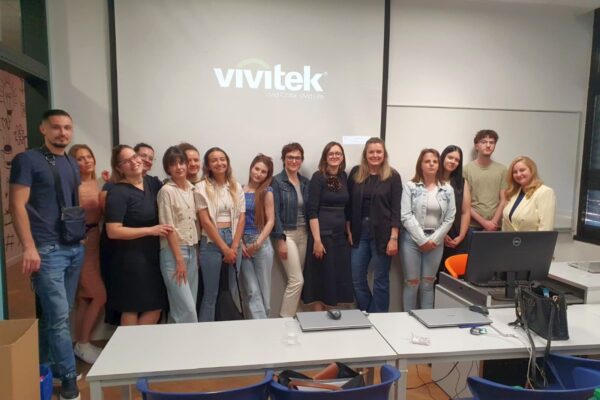
Ron Knopf, Gayle Bicknell and Van Bicknell shared with the students the latest insights and trends in leadership behavior in an age of global instability.
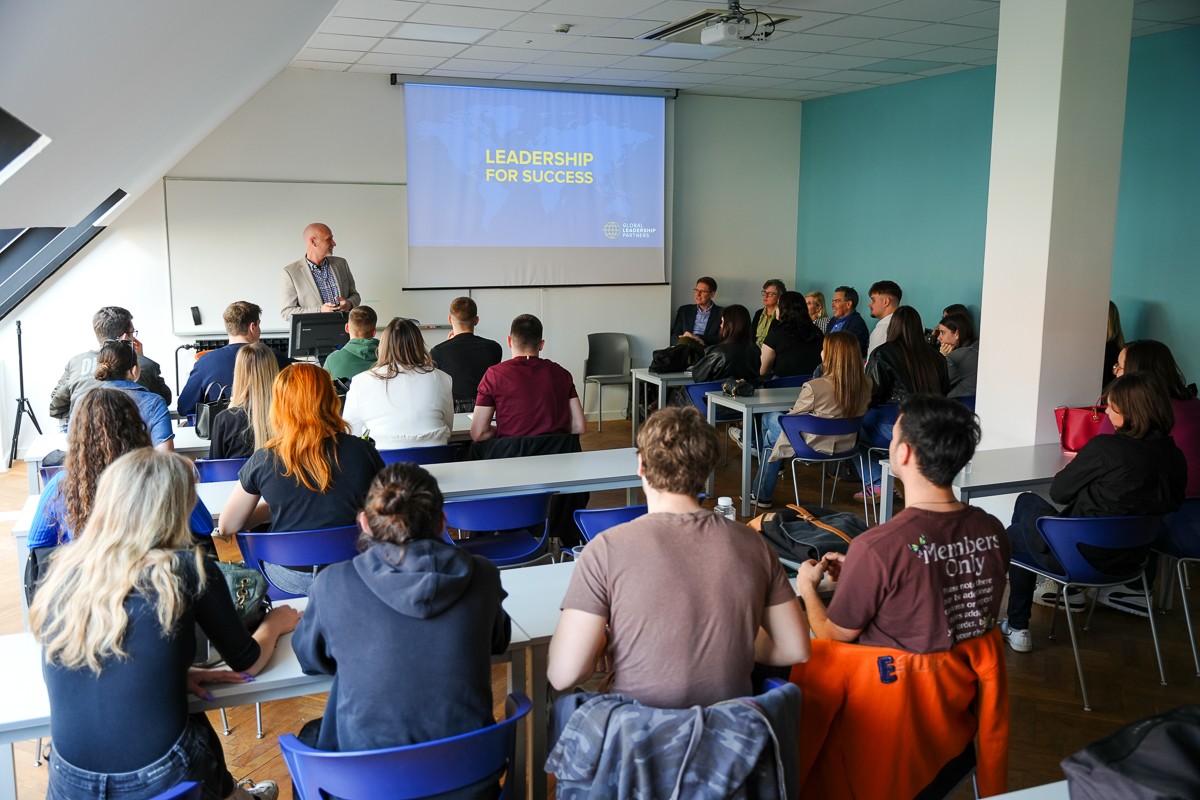
How is motivation achieved and maintained in teams? To what extent are motivation and optimism conditioned by external influences and global instabilities? How do real leaders behave in such moments?
These were, among others, the topics of the discussion and interactive lecture at the Ethics in Communications course of Professor M.Sc. sc. Zrinke Gregov at VERN's undergraduate study of Cyber Communication , where American experts from the non-profit organization for the education of business leaders Global Leadership Partners were guests.
On the basis of rich business and life experience, Ron Knopf, Gayle Bicknell and Van Bicknell conveyed to the students the latest knowledge and trends about the behavior of leaders in the age of global instability and argued which character traits of leaders are necessary for success, but also which character traits lead to failure.
Namely, during his career, Ron Knopf oversaw the development of Ford's first powertrain factory in China from the position of production manager, where he was also the general manager of the four billion dollar division.

Gayle Bicknell, today the president of the board of Corning Christian Academy in New York, has a wealth of business experience from the position of head of procurement and operations at the Corning company, better known for Gorilla glass used by leading mobile phone manufacturers.
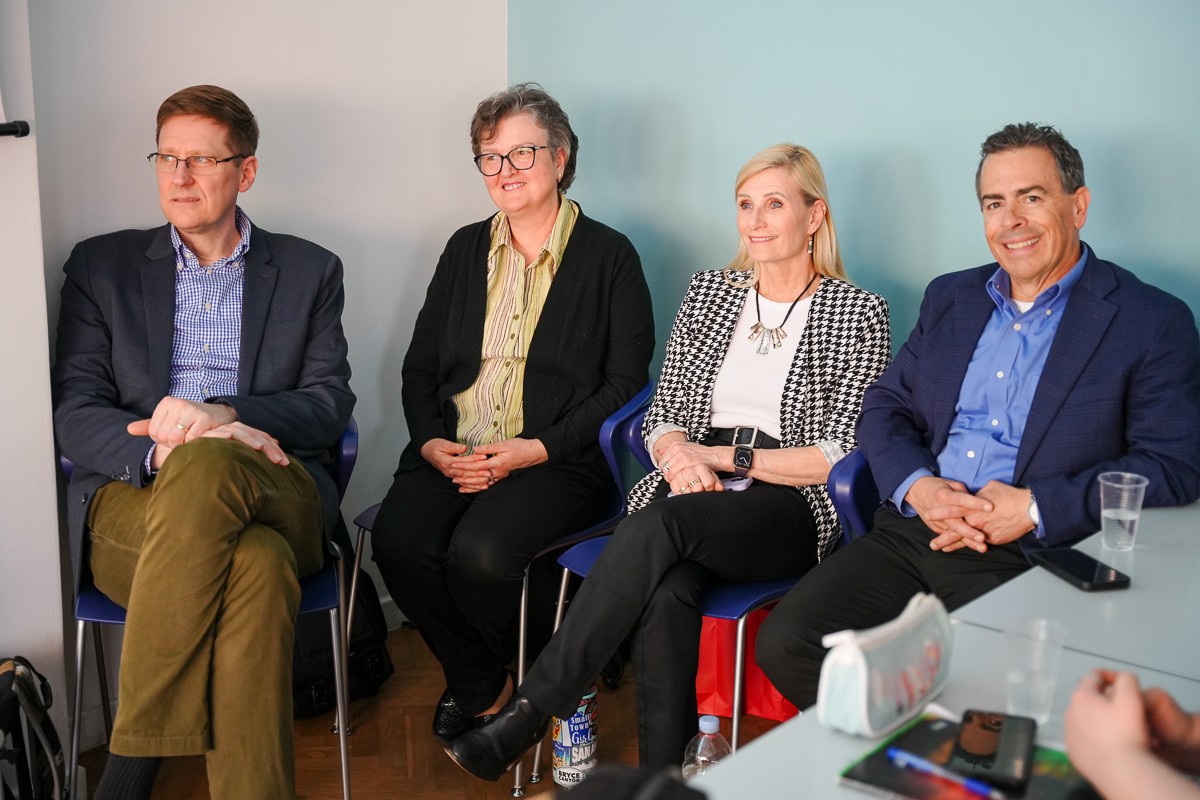
Van Bicknell is a retired senior supply chain manager at Corning, with more than 30 years of experience in engineering, manufacturing, development and supply chain management. In addition, both Gayle and Van have military experience, having served as officers in the US Army on European bases.

As they explained, it is important to be aware of what it means to be a leader and what the role of leadership is in all areas of our lives. Quoting John Maxwell who said that a leader is one who knows the way , goes the way, and shows the way, they actually wanted to convey that this does not necessarily mean: 1) being the first person on the organizational chart, 2) having the fancy title of president or CEO, or 3) having a superior set of powers and an enviable education.

"To be a leader, you don't have to be one of these. People in these positions are authorities, but not necessarily leaders. That's a very important distinction to make," they said at the end.