About the studio
Studij
Internet stvari
(Internet of Things -IoT )
Sveučilišni prijediplomski studij na Sveučilištu VERN’ u Zagrebu koji traje 6 semestara (180 ECTS) i vodi do sveučilišnog naziva univ. bacc. ing. comp. (sveučilišni prvostupnik inženjer Interneta stvari i računarstva). Studij je akreditiran od strane Agencije za znanost i visoko obrazovanje (AZVO) i razvrstan u 6. razinu Europskog kvalifikacijskog okvira. Po završetku studija polaznici imaju pravo nastavka na diplomski studij u Hrvatskoj i Europskoj uniji.
Vrsta
Trogodišnji sveučilišni
prijediplomski studij
Start of classes
October 2026.
ECTS credits
180 points
Duration
6 semesters
Develop a new generation of autonomous vehicles and smart cities
Želiš li postati IoT developer i sudjelovati u razvoju tehnologije koja mijenja način na koji komuniciramo sa svijetom oko sebe? Znaš li da gotovo svaki dan koristimo IoT a da toga nismo ni svjesni?! Koristimo pametne satove, pametne kućanske uređaje…
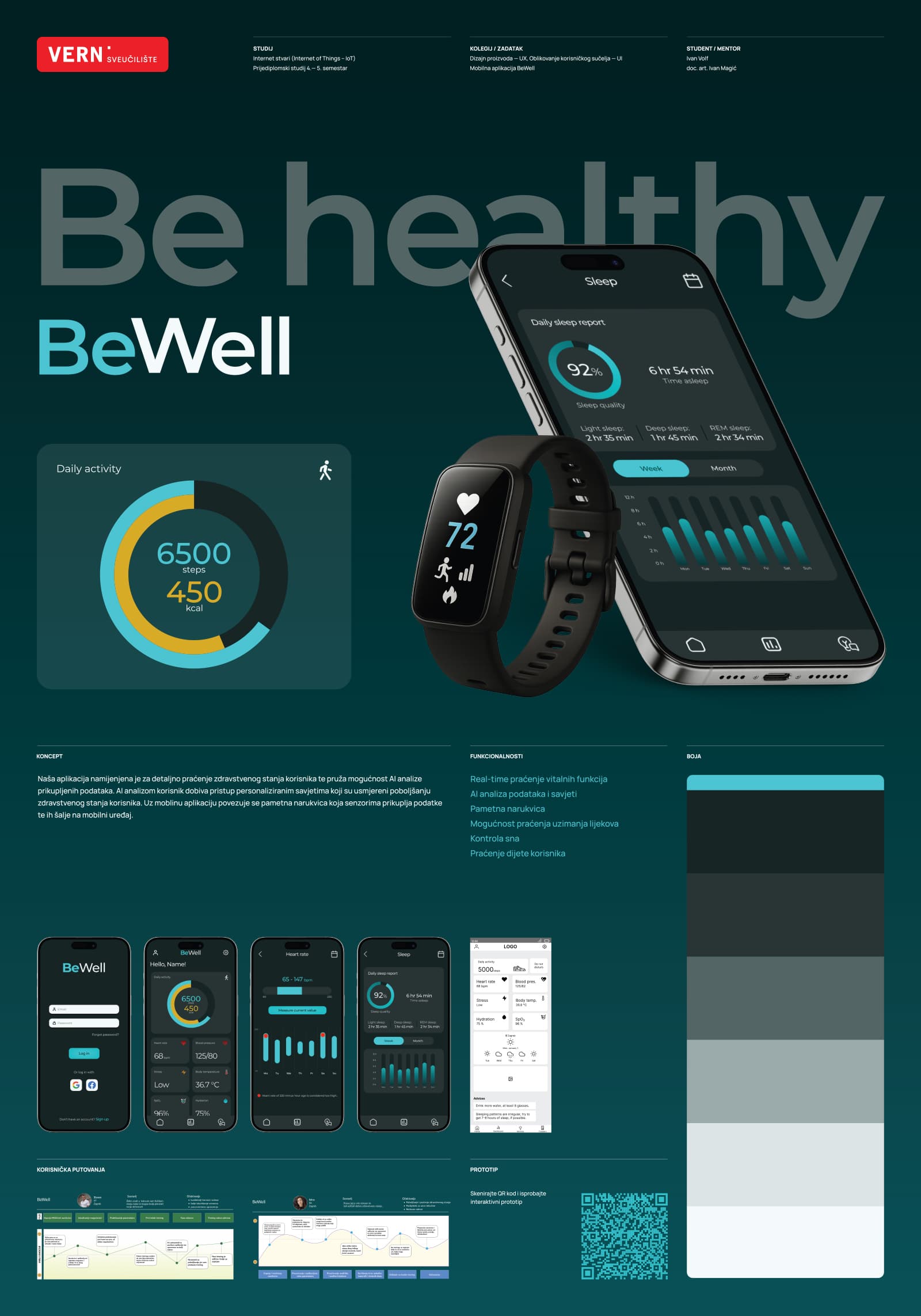
Zaroni u svijet IoT-a i razvijaj stvari poput pametnih fitness narukvica, pametnih gradova ili autonomnih vozila…
Studij IoT-a na Sveučilištu VERN’ spaja računarstvo, elektrotehniku, dizajn korisničkog sučelja i poslovne vještine te studente priprema za razvoj uređaja i sustava koji povezuju fizički i digitalni svijet. Studenti rade na konkretnim tehnološkim projektima za IoT proizvode, a znanja dodatno razvijaju kroz suradnju sa stručnjacima, tehnološkim tvrtkama i inovacijskim centrima.
What knowledge will you gain during your studies?
Electrical engineering and computer science
BASICS OF COMPUTER AND ELECTRICAL ENGINEERING
Elementary knowledge of computer science and electrical engineering, as well as mathematics, will serve as the foundation on which you will build each of your future IoT projects. You will get a great introduction to electrical engineering, circuits, operating systems, learn how the heart of a computer works, and much more.
PROGRAMIRANJE ZA IOT
Naravno da ćeš naučiti programirati, no naučit ćeš i kako programirati IoT projekte. Koristeći Python i Raspberry Pi naučit ćeš kako kodom povezati sklopove, senzore i aplikacije da upogoniš primjerice svog prvog robota.
NETWORKS, BASES AND SECURITY
You will learn how computer networks work and how different devices connect and communicate on a network. How to organize data in a database and how to manage it. You will learn about relational databases, SQL and other programming languages for database management, and how to protect computer systems from different types of threats and attacks and ensure data security.
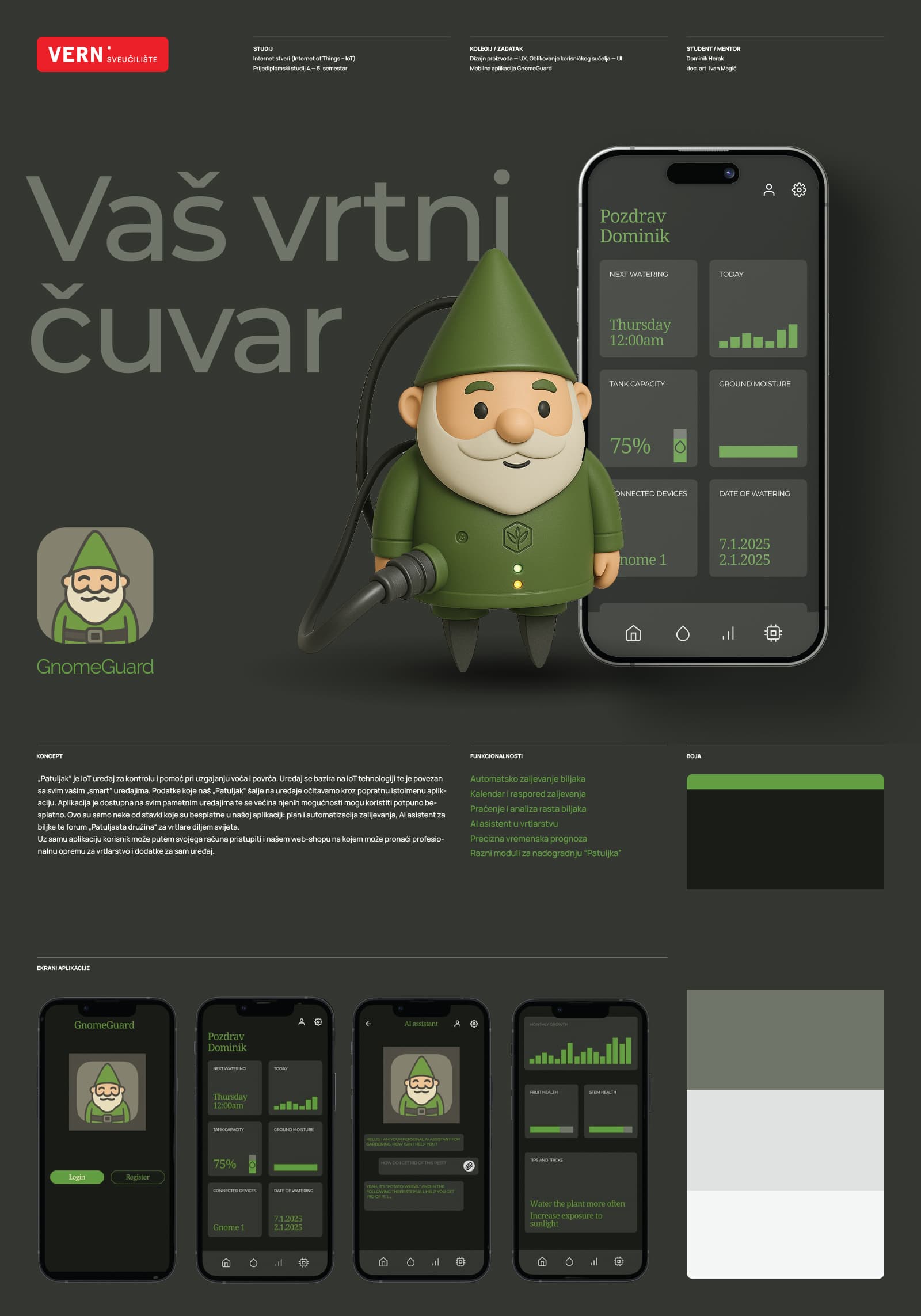
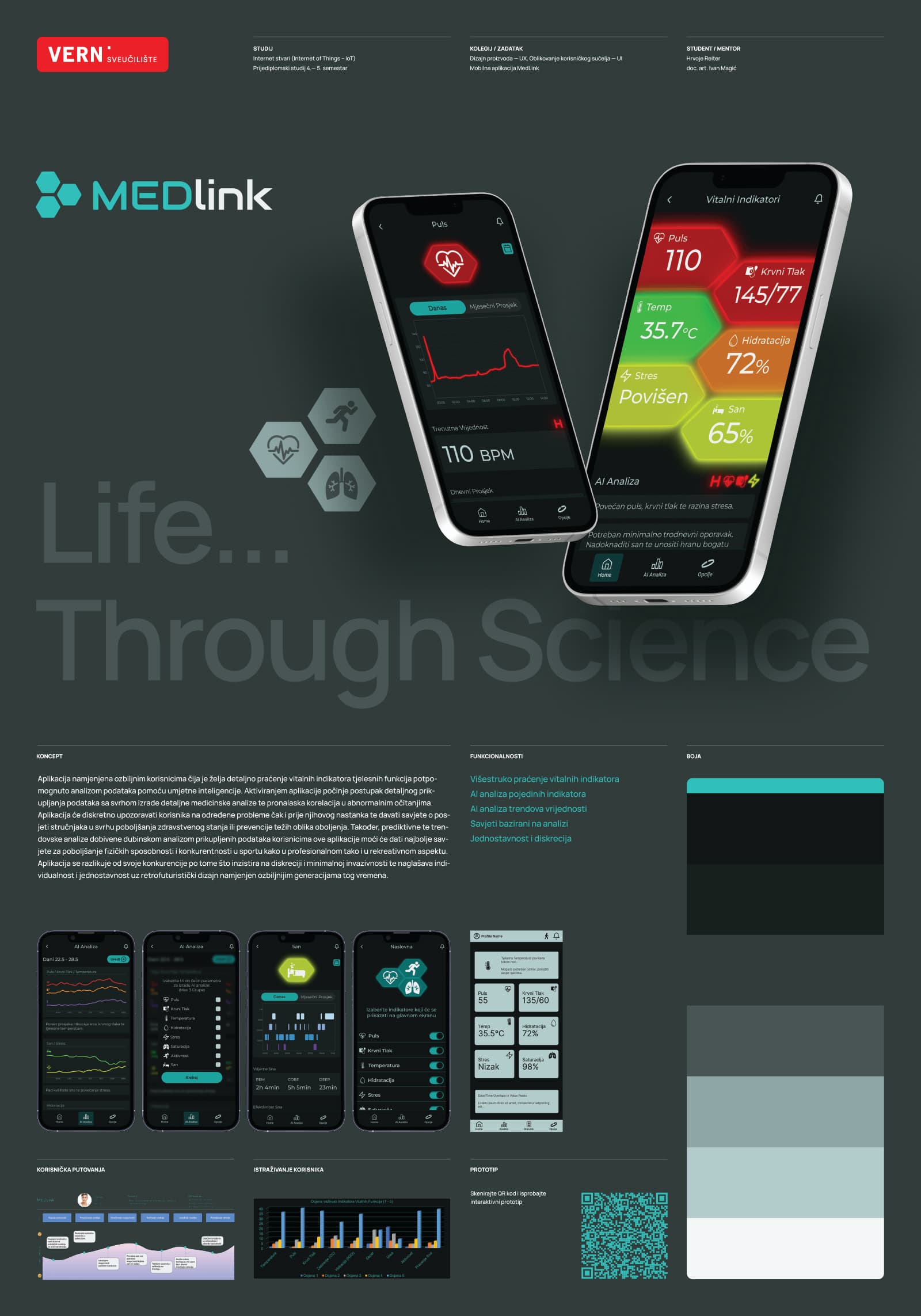
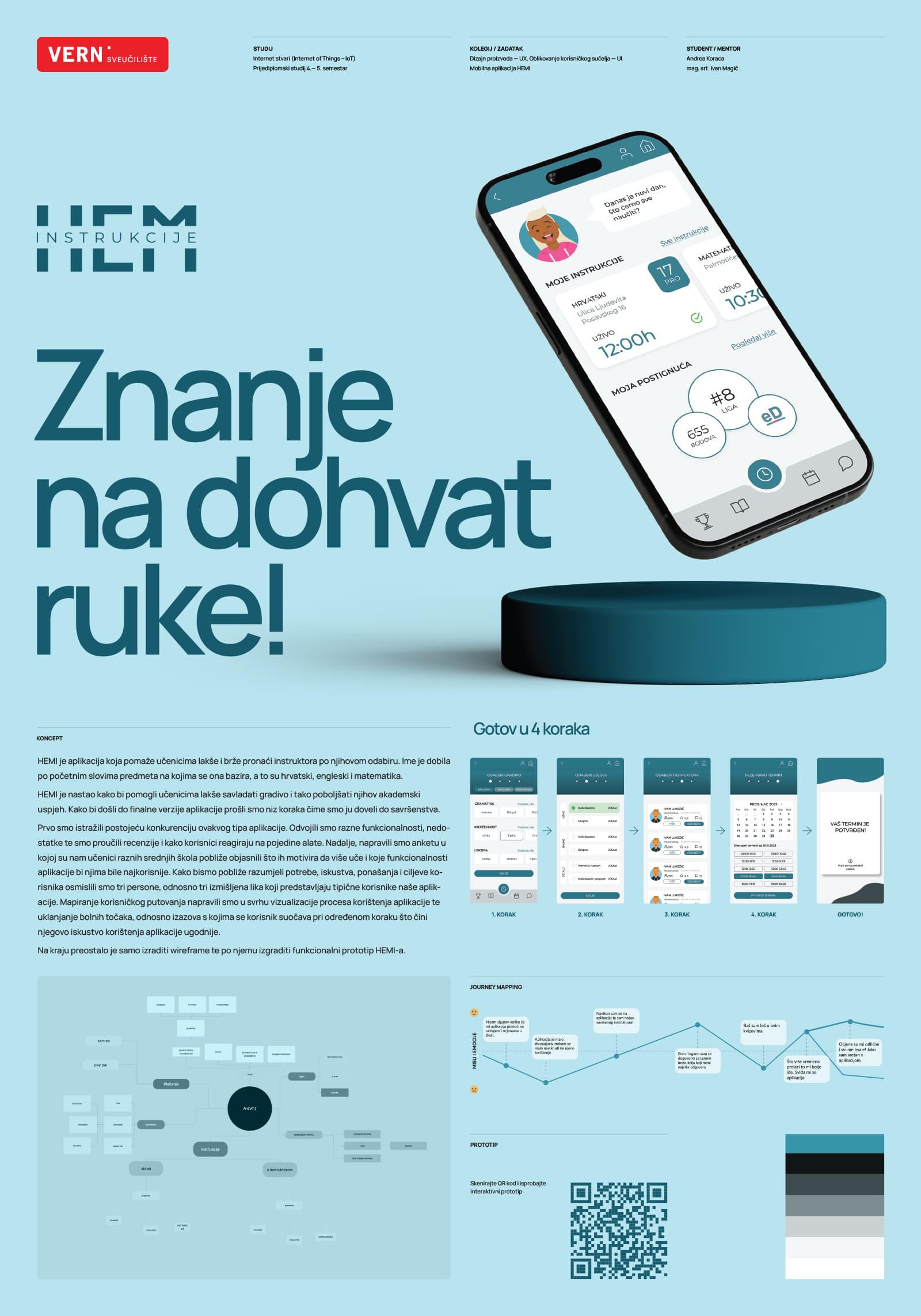
DESIGN, UX AND UI
Product Design, User Interface Design You will learn to create visually appealing and functional user interfaces for digital products and services. You will learn about the basics of color, typography, composition, interactions, animations, and other design principles. You will learn about the processes of user research, what a customer journey is, how to make prototypes, and how to test user experiences.
Soft skills (communication skills)
Developers are constantly communicating with a wide range of stakeholders. That's why communication skills, such as knowing the language of business or the language of IoT, such as wearables or V2X , are invaluable for your future professional development.
Business knowledge
Through the courses Startup for Enterprises 1 and 2, you will learn the basics of entrepreneurship and how to start a business . You will learn how to develop an idea, create a business plan, raise capital, create a team and launch your own startup . Project Management will give you the necessary skills to plan, organize and lead projects.
Elective courses
From the field of software engineering: Assistive technology, Distributed and parallel processing, JavaScript programming language, Computer vision, 3D printing, Databases for the Internet of Things
From the field of entrepreneurship: Innovative ways of financing, Quality management, Business plan
Elective courses will help you focus on the part of IoT that interests you most. Maybe you're more interested in business? Choose courses in the field of entrepreneurship. If you're more interested in technical topics like 3D printing, you can focus on software engineering.
Learning outcomes
After completing the studies, students will be able to:
- Use the characteristics of administrative and business writing style in Croatian and English through knowledge of spelling and grammatical norms, and express yourself orally and in writing in standard Croatian and English with an emphasis on the technical aspects of Internet of Things technologies.
- Apply mathematical methods and analytical judgment in the creation of mathematical models applicable to solving real problems.
- Design, plan, launch and manage a start-up company through the application of innovative tools for analysis, synthesis and creation of concrete solutions in the business environment, and make a plan for the application of the design thinking process to solve problems.
- Use the theoretical, practical and methodological foundations of product design as a complex interdisciplinary process.
- Design, develop and implement a business idea, manage projects with planning activities and implementation, and manage the quality of products, processes and business organizations. Design and apply basic electronic circuits and simple digital circuits using the theoretical foundations of Boolean algebra and distinguish between modern sensor and actuator technologies.
- Interpret basic concepts of electrical engineering, direct and alternating current.
- Use computer-aided design (CAD) and software used in computer-aided manufacturing (CAM), as well as basic rules in user interface design and analyze the level of user experience.
- Analyze modern forms of assistive technology and recognize its application. Identify the issues of information system security, identify threats and vulnerabilities in information systems, and recognize ways to reduce risk, i.e. protect the system.
- Explain the theoretical foundations of the Internet of Things (paradigm, structure, development, platforms, opportunities, examples, privacy and security), describe the basic components of modern operating systems, and explain and apply the basic concepts of computer network architecture and the technologies and protocols used, with special emphasis on features relevant to the Internet of Things.
- Differentiate the basic principles of wireless communications and apply different protocols for the purpose of realizing the said communication.
- Demonstrate the principle of processing large amounts of data and apply the software provided for this purpose for machine learning.
- Connect and use basic knowledge from the fields of natural sciences and technology for the purpose of achieving optical, automatic or contactless communication and interpretation of the real world on a computer from an image or sequence of images. Explain the basic concepts of robotics and analyze possible applications in practice.
- Design and implement relational and non-relational databases.
- Distinguish basic concepts and modes of operation of embedded systems and peripherally connected devices, and apply software engineering methods for the implementation, maintenance, and support of Internet of Things products.
- Develop and design software solutions in an integrated development solution, for embedded systems and/or Internet applications, using more complex data structures, algorithms and design patterns using lower and/or higher level programming languages, including the Android platform.
Study information
Head of study
Assistant Professor Petar Kolar, Ph.D.
petar.kolar@vern.hr
Head's Office: 091/4825-849
Professional title
Bachelor of Science in Internet of Things and Computing (univ. bacc. ing. comp.)
Top IoT skills you will master
- Programming languages
- Electronics and Circuits
- Cloud computing
- Information security
- UI and UX design
- Problem solving
- Business skills
What jobs are we preparing you for?
- Do you want to be an IoT Solution Architect or IoT developer? You will have the opportunity to work on cutting-edge technologies and create innovative solutions that change the world. Your solutions can help save lives, help industries become eco-friendly, or create devices that will automatically perform tasks for us.
- If you have a managerial streak in you, you can be an IoT project manager and play a key role in the launch of new IoT products on the market. Collaborating with engineers and developers, you will create products that exceed expectations, participating in all stages of production - from the idea to the launch of the product on the market.
Studij priprema za karijere IoT developera, IoT inženjera, programera, softverskog inženjera, programera aplikacija, programera ugradbenih sustava, firmware developera, IoT Solution Architecta i IoT Project Managera.
Teaching
1st year
1 . semester
| Course name | L | E | ECTS |
|---|---|---|---|
| Required courses | |||
| Basics of electrical engineering | 30 | 30 | 5 |
| Business Croatian language | 30 | 30 | 5 |
| English for the Internet of Things 1 | 30 | 30 | 5 |
| Mathematics 1 | 30 | 30 | 5 |
| Programming 1 | 30 | 30 | 5 |
| The structure of the Internet of Things | 30 | 30 | 5 |
2 . semester
| Course name | L | E | ECTS |
|---|---|---|---|
| Required courses | |||
| Electronics and digital circuits | 30 | 30 | 5 |
| English for the Internet of Things 2 | 30 | 30 | 5 |
| Management for start-up companies 1 | 30 | 30 | 5 |
| Mathematics 2 | 30 | 30 | 5 |
| Operating systems | 30 | 30 | 5 |
| Programming 2 | 30 | 30 | 5 |
2nd year
3 . semester
| Course name | L | E | ECTS |
|---|---|---|---|
| Required courses | |||
| Built-in systems 1 | 30 | 30 | 5 |
| Computer networks 1 | 30 | 30 | 5 |
| Product design | 30 | 30 | 5 |
| Programming for IoT | 30 | 30 | 5 |
| Sensors and actuators | 30 | 30 | 5 |
| Start-up management 2 | 30 | 30 | 5 |
4 . semester
| Course name | L | E | ECTS |
|---|---|---|---|
| Required courses | |||
| Built-in systems 2 | 30 | 30 | 5 |
| Computer networks 2 | 30 | 30 | 5 |
| Databases 1 | 30 | 30 | 5 |
| Programming for the Internet | 30 | 30 | 5 |
| Project management | 30 | 30 | 5 |
| User interface design | 30 | 30 | 5 |
3rd year
5 . semester
| Course name | L | E | ECTS |
|---|---|---|---|
| Required courses | |||
| Database 2 | 30 | 30 | 5 |
| Information systems security | 30 | 30 | 5 |
| IoT development project | 30 | 30 | 5 |
| Organization of program code | 30 | 30 | 5 |
| Programming for the Internet 2 (Javascript) | 30 | 30 | 5 |
| Robotics | 30 | 30 | 5 |
6 . semester
| Course name | L | E | ECTS |
|---|---|---|---|
| Required courses | |||
| Bachelor's thesis | 5 | ||
| Elective course 1 | 30 | 30 | 5 |
| Elective course 2 | 30 | 30 | 5 |
| Elective course 3 | 30 | 30 | 5 |
| Elective course 4 | 30 | 30 | 5 |
| Professional practice | 5 | ||
| Elective courses | |||
| 3D modeling and printing | 30 | 30 | 5 |
| Machine learning - AI | 30 | 30 | 5 |
| Programming for mobile platforms | 30 | 30 | 5 |
| Signal information processing | 30 | 30 | 5 |
| Wireless communication networks for IoT | 30 | 30 | 5 |
Academic calendar
Obrane završnih radova
Termini obrana završnih radova (akademska godina 2026/2027.) [PDF]
Workshop for finishing works
Workshop dates for final works
Enrollments
Enroll via “Become a student”
- By placing VERN in first place via the Postani-student.hr portal
- By logging into the VERN'a IT system
- It is recommended to take part in the admission process to reduce tuition fees*
Compulsory subjects and levels: MAT B, STR. JEZ. B
*The amount of tuition depends on the points achieved on the state graduation exam and the payment model.
Through the Admissions Process
Points are awarded for:
- average of the first three grades of high school
- motivational talk and
- general abilities test:
points are awarded for an academic scholarship
points are entered in "become a student" (up to 350 points)
*The amount of tuition depends on the points achieved in the admission process and the payment model.
Enrollment of transfer students from other higher education institutions
U tijeku su prijave na prijediplomske studije s početkom nastave u listopadu 2026.
Candidates who have studied or are currently studying at another higher education institution and wish to continue their studies at VERN can enroll as follows:
Open House – Meet Vern' University
- Find out all about studies
- Saznaj kako se upisati i ostvariti akademsku stipendiju
- Walk around the campus and get to know the space (canteen, library, film studio, etc.)
- Saznaj sve o životu na VERN’u (sport, gaming, putovanja, izlasci…)
The following Open Hours are:
Bit će objavljeni naknadno!

Tuition
Modeli i razredi školarina
za upis prijediplomskog studija u akademskoj godini 2026./2027.
The amount of one-year tuition fees depends on :
- Choosing a tuition model: one-time, semester or monthly
- Postignutom uspjehu u okviru prijemnog Postupka za akademsku stipendiju ili
- Scores obtained on the mandatory state matriculation exams (without the admission procedure)
Iznosi se odnose na školarine za upise u akademskoj godini 2026./27.
|
The option more favorable to the candidate is applied.
|
|||||
|---|---|---|---|---|---|
| Tuition group | One-time | Twice | 12 months of installments | Bodovi Prijemni Postupak za akademsku stipendiju | Bodovi državna matura (str jez, mat) |
| Group A | 3.500 | 3.700 | 3.900 | 300 – 350 | 200 – 300 |
| Group B | 4.100 | 4.300 | 4.500 | 224 – 299 | 130 – 199,99 |
| Group C | 4.600 | 4.900 | 5.100 | 200 – 223 | 105 – 129,99 |
| Group D | 5.100 | 5.400 | 5.600 | 145 – 199 | 0 – 104,99 |
Points (Better option)
Prijemni Postupak za akademsku stipendiju 300 – 350
Državna matura (str jez, mat) 200 – 300
Points (Better option)
Prijemni Postupak za akademsku stipendiju 224 – 299
Državna matura (str jez, mat) 130 – 199,99
Points (Better option)
Prijemni Postupak za akademsku stipendiju 200 – 223
Državna matura (str jez, mat) 105 – 129,99
Points (Better option)
Prijemni Postupak za akademsku stipendiju 145 – 199
Državna matura (str jez, mat) 0 – 104,99
Details about the admission process
Tuition includes
- Administering enrollment and studying at VERN
- Teaching according to the curriculum
- Group and/or individual mentoring
- Two exams for each course
- Administration and support during the organization and execution of professional practice
- Use of teaching and presentation equipment – computers, videos, projectors, etc.
- Use of the library and the faculty multi-media center for study purposes
- Using the VERN'a information system for study purposes
- Teaching materials produced by VERN: written summaries and notes from lectures and workshops, scripts, etc.
- Organized use of certain sports facilities in rented times, visits to theater performances and concerts according to the CARPE DIEM program
- Defense of the Final/Diploma Thesis
- Graduation ceremony – making the diploma, using it, commemorative caps, etc.
Projects
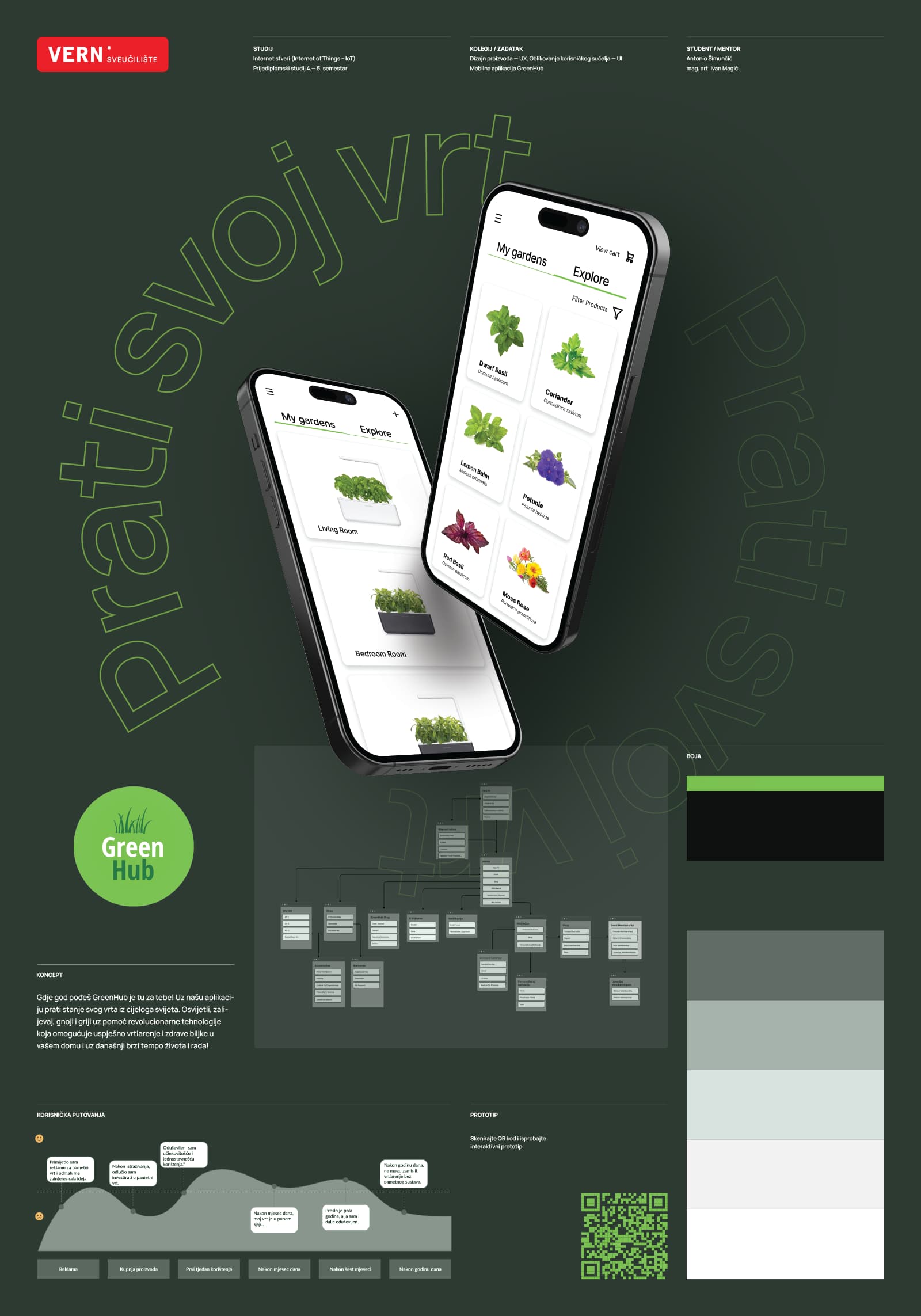
Student projects