About the studio
Become a digital and TV journalist
Do you want to be a face that people recognize on TV or a reporter who informs citizens in crisis situations? Or do you prefer to be a voice that people recognize on the radio? Do you want to find sources and follow clues until the story itself leads you to the truth? Or do you simply want to take advantage of all the possibilities of online platforms and report in real-time?
The study prepares you for a range of journalistic jobs, from traditional media such as television or radio, to modern digital media that introduce new rules and dynamics into the profession every day.
Study the future today. Study at VERN'.
Type
Three-year professional undergraduate study
Start of classes
October 2026.
ECTS credits
180 points
Duration
6 semesters
What knowledge will you gain during your studies?
Professional knowledge
Core skills
Reporting is the core of journalism. You will certainly spend the first years of your career in the field, writing as you go, trying to capture all the details of the story you are reporting on. That is why you will learn everything about the art of reporting during your studies, because a report, be it thematic, sports or political, must first be written.
Broadcasting journalism
While we watch our favorite online content, watch a TV news program, or listen to a radio show, we rarely think about the production behind it. Behind every show is a huge amount of work by journalists. During the course, you will learn all about it – what is the difference between television and radio journalism, what production processes take place behind the scenes, how to record and edit a video, and how to perform and host a show in general.
Power skills
During your studies, you will also learn the advanced skills of the trade. For example, how to do real investigative journalism or what writing style to choose for social networks and what for portals. You will learn the tricks of transmedia storytelling, but also find out what it's like to be an editor in practice.
Basic knowledge
A good journalist knows his profession. You will use the basic knowledge you will gain during your studies on a daily basis. How does the media industry work? What is the importance of a good headline? How do you write a report and how do you write a critical review? How do you communicate with sources and how do you communicate with the public? And how do you ensure the necessary credibility in everything you do?
Interdisciplinary knowledge
Journalists use knowledge from different fields to always understand the broader context of events. Sometimes you will need the legal and political context, and sometimes an understanding of contemporary international relations. In other cases, you will rely on your knowledge of media entrepreneurship or public relations. Fortunately, you will gain all of this knowledge during your studies.
Learning outcomes
After completing the studies, students will be able to:
- Recognize and explain basic theoretical concepts in the field of media theory and mass communication. Identify and interpret components of the contemporary media environment and market aspects of media business.
- Demonstrate knowledge of the local media industry and its practices, as well as the real needs of the media market.
- Distinguish and apply different functional styles of standard language in written and spoken communication.
- Demonstrate relevant language skills in English adapted to the needs of journalism as a profession.
- Differentiate journalistic types and genres and interpret the specifics of the media content production process in different media.
- Demonstrate the ability to establish the reliability and relevance of information and its critical evaluation.
- Design and shape various journalistic formats (textual, radio, audiovisual, multimedia...) for publication on various media platforms.
- To shape news and more complex journalistic forms (interview, comment, review, column) for various media platforms.
- Demonstrate knowledge of the methodology and fundamental elements of investigative journalism.
- Explain the role and significance of journalism and mass media for the emergence and functioning of a liberal-democratic social system. Identify the fundamental norms of ethical conduct in the journalism profession and demonstrate their application in the context of the principle of media freedom and the concepts of privacy and public interest.
- Explain the basic concepts of public relations and apply the basic techniques of the profession.
- Demonstrate knowledge of tools for the production and processing of textual, audio, visual and audiovisual content and procedures for publishing content on digital platforms.
- Demonstrate the ability to work in a team and understand business processes in the production of media content.
Study information
Full-time study
Classes are held over 2 semesters of 15 weeks. Daily commitment is 4 to 6 teaching hours.
Head of study
Tomislav Štuka , professor, lecturer
tomislav.stuka@vern.hr
Head's Office: 091/4825-849
Professional title
Bachelor of Journalism (baccalaureus/baccalaurea) (bacc. nov.)
Top skills you will master
- Investigative reporting
- Storytelling
- Media Production
- Editing
- Media relations
- Public speaking
- Leadership
Lecturers – TOP experts
- Tomislav Klauški, journalist and political columnist
- Silvija Londero Šimleša, director and editor-in-chief of Media servis
- Jura Ozmec, editor-in-chief of Sports Television
- Daniela Trbović – TV presenter and journalist
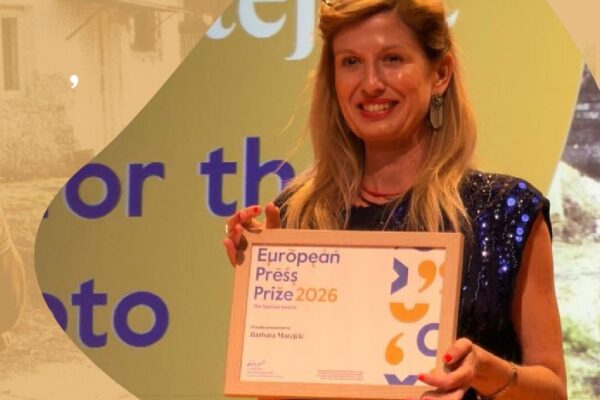
- Barbara Matejčić – investigative journalist
- Davor Stanković, phonetician and public speaking expert
- Lana Hudeček, linguist
- Stanislav Bender, Agency for Electronic Media
- Robert Tomić Zuber, journalist and editor in Croatian media
- Hrvoje Klasić, historian and political analyst
- and many others...
Teaching
1st year
1 . semester
| Course name | L | E | ECTS |
|---|---|---|---|
| Required courses | |||
| Academic writing | 16 | 16 | 4 |
| Basics of communication studies | 16 | 16 | 5 |
| Contemporary Croatian history in the European context | 16 | 16 | 5 |
| Croatian linguistic culture | 16 | 16 | 5 |
| Introduction to journalism | 16 | 16 | 6 |
| Media industry | 16 | 16 | 5 |
2 . semester
| Course name | L | E | ECTS |
|---|---|---|---|
| Required courses | |||
| English as a media language | 16 | 16 | 4 |
| Media language and the basics of journalistic style | 16 | 16 | 4 |
| Print media attitudes and practices | 16 | 16 | 4 |
| Radio journalism | 16 | 16 | 5 |
| Social history of media and journalism | 16 | 16 | 4 |
| Television journalism | 16 | 16 | 5 |
| The art of reporting | 16 | 16 | 4 |
2nd year
3 . semester
| Course name | L | E | ECTS |
|---|---|---|---|
| Required courses | |||
| Introduction to digital and online media | 16 | 16 | 5 |
| Legal-political system and media law | 16 | 16 | 4 |
| Media theory | 16 | 16 | 4 |
| Photojournalism | 16 | 16 | 4 |
| Production processes on television | 16 | 16 | 5 |
| Radio production | 16 | 16 | 4 |
| Writing in print | 16 | 16 | 4 |
4 . semester
| Course name | L | E | ECTS |
|---|---|---|---|
| Required courses | |||
| Complex journalistic forms | 16 | 16 | 4 |
| Ethics and deontology of journalism | 16 | 16 | 4 |
| Filming and editing in video journalism | 22 | 22 | 5 |
| New media narratives - journalism 2.0 | 16 | 16 | 4 |
| Public relations | 16 | 16 | 4 |
| Public speaking and oratory in broadcast journalism | 16 | 16 | 4 |
| Radio journalist-host | 16 | 16 | 5 |
3rd year
5 . semester
| Course name | L | E | ECTS |
|---|---|---|---|
| Required courses | |||
| Basics of economic literacy | 16 | 16 | 4 |
| Contemporary international relations | 16 | 16 | 4 |
| Editing in practice | 16 | 16 | 4 |
| Investigative journalism | 16 | 16 | 5 |
| Media management and media entrepreneurship | 16 | 16 | 4 |
| Thematic reporting | 16 | 16 | 4 |
| TV journalist-host | 16 | 16 | 5 |
6 . semester
| Course name | L | E | ECTS |
|---|---|---|---|
| Required courses | |||
| Bachelor's thesis | 30 | 30 | 6 |
| Elective course 1 | 30 | 30 | 4 |
| Elective course 2 | 30 | 30 | 4 |
| Elective course 3 | 30 | 30 | 4 |
| Transmedia storytelling in journalism | 16 | 16 | 4 |
| Mandatory media internship | 8 | ||
| Elective courses | |||
| Media literacy and fact-checking | 15 | 15 | 4 |
| Political journalism | 15 | 15 | 4 |
| Sports journalism | 15 | 15 | 4 |
| Television show | 15 | 15 | 4 |
Academic calendar
Final thesis defenses
Final thesis defense dates (academic year 2025/2026) [PDF]
Workshop for finishing works
Workshop dates for final works
Careers


Enrollments
Enroll via “Become a student”
- By placing VERN in first place via the Postani-student.hr portal
- By logging into the VERN'a IT system
- It is recommended to take part in the admission process to reduce tuition fees*
Compulsory subjects and levels: CROATIAN, LANGUAGE B
*The amount of tuition depends on the points achieved on the state graduation exam and the payment model.
Through the Admissions Process
Points are awarded for:
- average of the first three grades of high school
- motivational talk and
- general abilities test:
points are awarded for an academic scholarship
points are entered in "become a student" (up to 350 points)
*The amount of tuition depends on the points achieved in the admission process and the payment model.
Enrollment of transfer students from other higher education institutions
Applications are currently being accepted for undergraduate studies starting in March 2026 and October 2026.
Candidates who have studied or are currently studying at another higher education institution and wish to continue their studies at VERN can enroll as follows:
Open House – Meet Vern' University
- Find out all about studies
- Saznaj kako se upisati i ostvariti akademsku stipendiju
- Walk around the campus and get to know the space (canteen, library, film studio, etc.)
- Find out everything about life on VERN (sports, gaming, traveling, going out...)
The following Open Hours are:
- za sljedeći termin otvorenog sata kontaktirajte Odjel za komunikacije na e-mail: upisi@vern.hr ili 091 48 25 003
Studenti, profesori i ekipa s VERN’a te čekaju. Prijavi se za Otvoreni sat 🙂

Tuition
Modeli i razredi školarina
za upis prijediplomskog studija u akademskoj godini 2026./2027.
The amount of one-year tuition fees depends on :
- Choosing a tuition model: one-time, semester or monthly
- Postignutom uspjehu u okviru prijemnog Postupka za akademsku stipendiju ili
- Scores obtained on the mandatory state matriculation exams (without the admission procedure)
Iznosi se odnose na školarine za upise u akademskoj godini 2026./27.
|
The option more favorable to the candidate is applied.
|
|||||
|---|---|---|---|---|---|
| Tuition group | One-time | Twice | 12 months of installments | Bodovi Prijemni Postupak za akademsku stipendiju | Bodovi državna matura (hr, str jez) |
| Group A | 3.500 | 3.700 | 3.900 | 300 – 350 | 250 – 300 |
| Group B | 4.100 | 4.300 | 4.500 | 224 – 299 | 185 – 249,99 |
| Group C | 4.600 | 4.900 | 5.100 | 200 – 223 | 145 – 184,99 |
| Group D | 5.100 | 5.400 | 5.600 | 145 – 199 | 0 – 144,99 |
Points (Better option)
Prijemni Postupak za akademsku stipendiju 300 – 350
Državna matura (hr, str jez) 250 – 300
Points (Better option)
Prijemni Postupak za akademsku stipendiju 224 – 299
Državna matura (hr, str jez) 185 – 249,99
Points (Better option)
Prijemni Postupak za akademsku stipendiju 200 – 223
Državna matura (hr, str jez) 145 – 184,99
Points (Better option)
Prijemni Postupak za akademsku stipendiju 145 – 199
Državna matura (hr, str jez) 0 – 144,99
Details about the admission process
Tuition includes
- Administering enrollment and studying at VERN
- Teaching according to the curriculum
- Group and/or individual mentoring
- Two exams for each course
- Administration and support during the organization and execution of professional practice
- Use of teaching and presentation equipment – computers, videos, projectors, etc.
- Use of the library and the faculty multi-media center for study purposes
- Using the VERN'a information system for study purposes
- Teaching materials produced by VERN: written summaries and notes from lectures and workshops, scripts, etc.
- Organized use of certain sports facilities in rented times, visits to theater performances and concerts according to the CARPE DIEM program
- Defense of the Final/Diploma Thesis
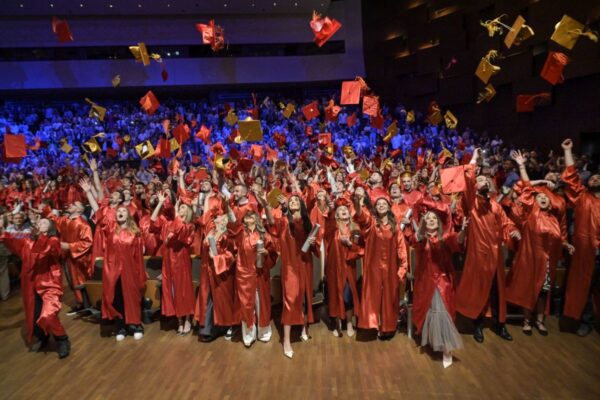
- Graduation ceremony – making the diploma, using it, commemorative caps, etc.